




Cebuano
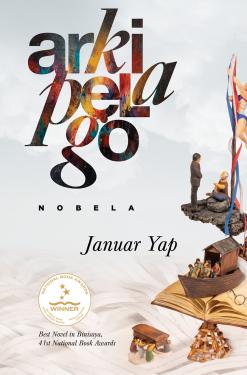
Katawhan, kaislahan, kadagatan, kasaysayan—kalimting gidak-o’g kagamyon—matag usa kanato milangkob sa kapupod-ang matalinghaga: diin gikan, hain sa kasamtangan, unsay padulngan? Ang Arkipelago usa ka matang sa pag-angkon sa mga komplikadong koneksyon sa damgo ug riyalidad ning atong kinabuhi isip nasud. Unano nga mitaban sa sexy dancer, ang suicidal nga faux Rizal ug si Tasyong negosyador/biyahedor, ang nuisance candidate nga miretiro sa isla, ang higalang tagolilong, mga sanglahon sa lantsang harag, ug ang liboa’g usa ka mananagat nga hatod-kuha’g sugilanon sa misteryusong Warden Blanco sa Kalipung-awan—pipila lamang kini sila sa mga tripolante ning biyahe sakay sa dakong barko sa mga nalisoan.
Translation by J. Bengan:
Peoples, islands, seas, histories—no matter how great or small—each one of us make up this enigmatic archipelago: where do we come from, where are we now, and where are we going? Arkipelago is a way of owning the complicated connections between dream and reality in our collective lives as a nation. A little man elopes with a sexy dancer, a suicidal faux Rizal and Tasyo the negotiator/travelling salesman, a nuisance candidate who retires in an island, a friendly tagolilong, a band of lepers in a tilting boat, and a thousand and one fisherfolk delivering and collecting stories from the mysterious Warden Blanco in Kalipung-awan—these are but some of the seafarers in a journey aboard the massive ship of the divinely mad.
English (Excerpt from the translator’s introduction)
Arkipelago is a novel about islander-savants living through political unrest, natural calamities, and postcolonial hangovers. A bar dancer maintains a difficult pose amid a brawl among Filipinos and Japanese, American, and Spanish patrons of a strip club; a troubled genius converses about entwined histories with a duende; a congressman swallows liters of crude oil that leaked in a shipwreck in the middle of a typhoon; a palm wine philosopher keeps running for president; a fishing village relies on bamboo shoots as substitute for destroyed reefs; an elusive here-now-gone-later entity called the tagolilong that draws together the lives of the people he encounters; a drydocked American period ship reveals a history of a leper colony; a book whose words are written in invisible ink becomes the author-scholar’s object of study. The islands they inhabit often evoke the uncanny worlds of Visayan radio and TV tragicomedies. A number of historical events are retold, such as the declaration of martial law, an American-period leper colony, and even farcical Senate hearings. These figures embody a vigorous portrait of the Philippine islands, an archipelago of obscure geniuses defying the odds.
Published in 2026.